



- Home
- Sightseeing Spots
Sightseeing Spots
1 - 12 / 12 RESULTS
-
Sakae / Fushimi
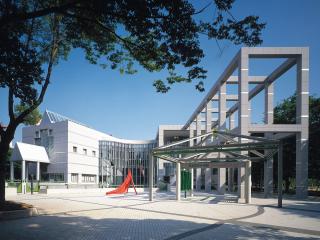
Nagoya City Art Museum
Located within Shirakawa Park in Fushimi, the center of Nagoya City, the museum stands in a quiet setting ideal for appreciating art. Its exhibitions consist of two main categories: the Permanent Collection Exhibition, featuring works from the museum's collection, and Special Exhibitions, focusing on individual artists or specific themes. In addition, the museum places strong emphasis on educational and outreach programs that encourage people to enjoy and engage with art. See More
Located within Shirakawa Park in Fushimi, the center of Nagoya City, the museum stands in a quiet setting ideal for appreciating …See More
-
Eastern Area
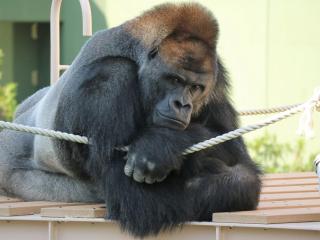
Nagoya Higashiyama Zoo and Botanical Gardens
Don’t miss the Asian tropical rainforest area opened in 2023 and the new jaguar enclosure! With the largest number of species kept in Japan, from tiny medaka fish to huge Asian elephants, visitors can observe a wide variety of animals. At the Gorilla and Chimpanzee House, home to Shabani, the handsome Western lowland gorilla famous for his good looks, as well as diverse exhibition facilities such as Zoogium (the Asian elephant house) and the koala house, visitors can do more than just observe the animals. There are also abundant educational displays introducing their ecology and habitats, allowing you to learn while having fun. The botanical garden displays about 7,000 species of plants, making use of a large greenhouse and the natural forest of the hilly area. In spring, the Cherry Blossom Corridor is adorned with 1,000 cherry trees of about 100 varieties. In autumn, around 50… See More
Don’t miss the Asian tropical rainforest area opened in 2023 and the new jaguar enclosure! With the largest number of species …See More
-
Eastern Area
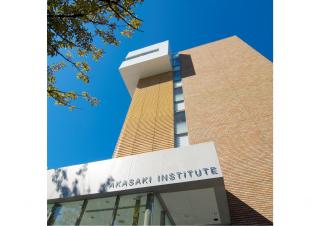
Nagoya University Akasaki Institute
The Akasaki Institute was built to commemorate the research achievements of Distinguished Professor Isamu Akasaki, promote original and cutting-edge scientific and technological research at Nagoya University, and contribute to society at large. The exhibition room on the first floor is free to enter and open to the public. On display are a 160-inch LED display, traffic lights and mobile phones using blue light-emitting diodes, Professor Akasaki's research achievements, and experimental equipment. In addition, you can see an official replica of the Nobel Prize medal awarded to Professor Akasaki and Professor Hiroshi Amano in 2014, as well as the same equipment that Professor Akasaki donated to the Nobel Museum. See More
The Akasaki Institute was built to commemorate the research achievements of Distinguished Professor Isamu Akasaki, promote origin…See More
-
Eastern Area
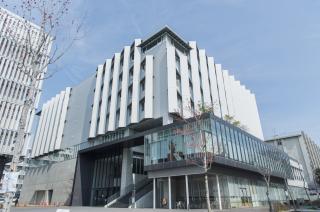
Nagoya University 2008 Nobel Prize Exhibition Hall
This exhibition hall was opened to commemorate the 2008 Nobel Prize in Physics awarded to Dr. Toshihide Masukawa and Dr. Makoto Kobayashi, both graduates of Nagoya University, and the 2008 Nobel Prize in Chemistry awarded to Dr. Osamu Shimomura, a former assistant professor at the same university. It displays official replicas of Nobel Prize medals and numerous explanatory panels on Nobel Prize research, allowing visitors to get up close and personal with the research that led to the Nobel Prize. It also introduces some of the research and educational styles of the Shoichi Sakata Laboratory (Elementary Particle Theory Laboratory, commonly known as "E-Lab"), which produced Dr. Masukawa and Dr. Kobayashi, and the Yoshimasa Hirata Laboratory, which trained Dr. Shimomura. See More
This exhibition hall was opened to commemorate the 2008 Nobel Prize in Physics awarded to Dr. Toshihide Masukawa and Dr. Makoto K…See More
-
Eastern Area
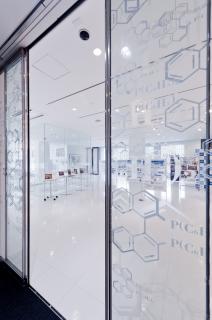
Nagoya University Chemistry Gallery (Noyori Materials Science Laboratory)
This gallery on the second floor of the Noyori Materials Science Laboratory was built to commemorate Nagoya University Distinguished Professor Ryoji Noyori, who received the Nobel Prize in Chemistry in 2001. It is open to the public with the aim of widely communicating the importance of chemistry to the general public and nurturing the next generation of researchers, and includes an exhibition room related to Distinguished Professor Noyori's Nobel Prize with the Inspiration Space for the Next-generation Researchers, Introduction to Dr. Noyori's Footsteps, and other sections. See More
This gallery on the second floor of the Noyori Materials Science Laboratory was built to commemorate Nagoya University Distinguis…See More
-
Eastern Area
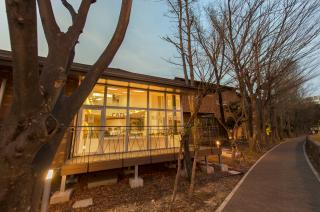
Nagoya University Gender Research Library
The Gender Research Library is open to anyone interested in gender issues. You can browse books related to women's, feminism, and gender studies, as well as various archives and collections. The library also plans and holds lectures, seminars, reading groups, etc. in the library's lecture rooms. See More
The Gender Research Library is open to anyone interested in gender issues. You can browse books related to women's, feminism, and…See More
-
Eastern Area
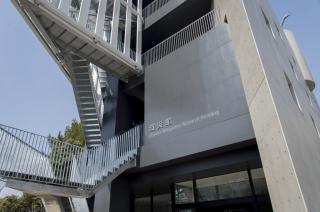
Nagoya University Disaster Mitigation Research Building
Nagoya University’s Disaster Mitigation Research Building is a base for the realization of a disaster-mitigating society through collaboration between industry, academia, government, and the private sector. It is the university's first seismically isolated building and is equipped with self-powered and solar power generation equipment. In normal times, it serves as a place for cutting-edge research into disaster prevention and mitigation as well as a learning space open to the public. Should a large-scale disaster occur, it acts as a base for disaster response by the university and local area. In addition, it is equipped with a ground monitoring system as well as an experimental facility that reproduces large-amplitude, long-period seismic shaking, and the entire building serves as a place for the development and testing of architectural earthquake-resistance technology. See More
Nagoya University’s Disaster Mitigation Research Building is a base for the realization of a disaster-mitigating society through …See More
-
Eastern Area
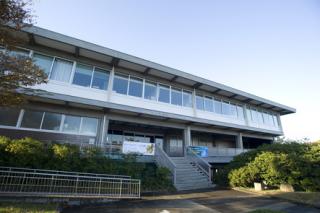
Nagoya University Museum
Nagoya University Museum was established in April 2000 as the fifth integrated university museum in Japan. Its purpose is to comprehensively and internationally provide feedback, resources, and social return on the academic specimens and materials of Nagoya University, as well as the results of university research. It has six main missions: Research, Education for the Next Generation, Exhibitions, Creation and Inheritance of Knowledge, Specimen Collection, International Exchange, etc. See More
Nagoya University Museum was established in April 2000 as the fifth integrated university museum in Japan. Its purpose is to comp…See More
-
Eastern Area
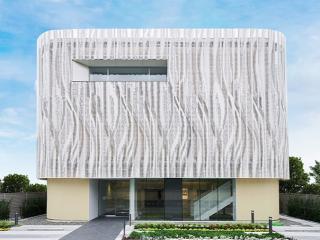
Hoyu Hair Color Museum
Japan's first museum specializing in hair color, the widely known hair coloring company Hoyu opened the Hoyu Hair Color Museum as part of its 100th anniversary commemoration project. The museum highlights the culture and history of hair dyeing in Japan and Hoyu's history and involvement in the field. See More
Japan's first museum specializing in hair color, the widely known hair coloring company Hoyu opened the Hoyu Hair Color Museum as…See More
-
Eastern Area
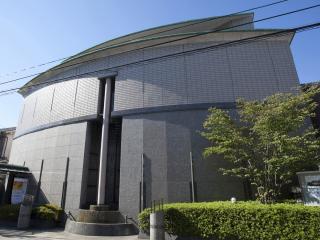
Furukawa Art Museum and Tamezaburo Memorial Hall
Sukiya-style architecture and art Furukawa Art Museum was opened in November 1991 to display art collected over many years by the first curator, Tamezaburo Furukawa (1890-1993). The art was donated with the wish that it would be enjoyed by many people, not just shut away in a private collection. The collection totals about 2,800 items, with a focus on contemporary Japanese painting. It also includes oil paintings, ceramics, crafts, a 15th century illustrated manuscript, and more. Currently, various educational activities, such as art lectures and workshops, are also available in addition to the exhibition of the collection. In November 1995, Tamezaburo's private residence was opened up to the public as the Tamezaburo Memorial Hall, in accordance with his wish for it to be a place of relaxation for everyone. Six buildings from the Tamezaburo Memorial Hall built in 1934, including … See More
Sukiya-style architecture and art Furukawa Art Museum was opened in November 1991 to display art collected over many years by …See More
-
Southern Area
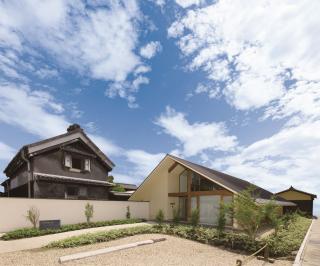
Chiyokura Memorial Museum
See More
See More
-
Outside of Nagoya
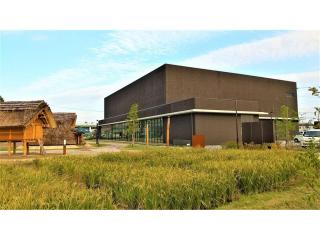
Aichi Asahi Site Museum
This museum of ancient civilization introduces the Asahi Ruins, the largest Yayoi-period ruins in Japan, located in Aichi Prefecture. The Asahi Ruins are one of the largest settlements in Japan, which existed from the early Yayoi period to the early Kofun period (6th century BC to 4th century AD). The settlement flourished as the center of life and culture in the region and played an important role in connecting the Yayoi cultures of eastern and western Japan. Investigations to date have revealed that the ruins stretch 1.4 km from east to west and 0.8 km from north to south, with an estimated area of 800 thousand to one million square meters. Residences were built on slight elevations on the north and south sides of a valley that flows from northeast to southwest. Graves were built to surround the residential area with large burial areas particularly widespread on the east and west … See More
This museum of ancient civilization introduces the Asahi Ruins, the largest Yayoi-period ruins in Japan, located in Aichi Prefect…See More