

- Home
- Sightseeing Spots
Sightseeing Spots
21 - 40 / 59 RESULTS
-
Eastern Area
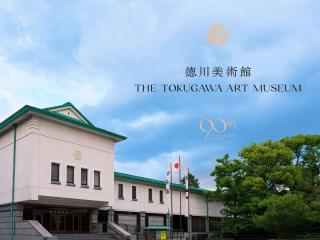
The Tokugawa Art Museum
An art museum of important artifacts from the Owari Tokugawa family, including items inherited from Tokugawa Ieyasu This art museum has a collection of more than 10,000 feudal lord implements, starting with items that once belonged to Tokugawa Ieyasu, and items treasured by the first head of the Owari Tokugawa family, Yoshinao (Ieyasu's ninth son), and his descendants. The museum is proud to hold nine National Treasures, including the Illustrated Scroll of The Tale of Genji, 59 important cultural properties, and many other high quality treasures that have been preserved in good condition. The main hall is registered as a national tangible cultural property. See More
An art museum of important artifacts from the Owari Tokugawa family, including items inherited from Tokugawa Ieyasu This art m…See More
-
Eastern Area
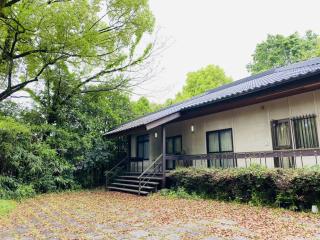
Tokuro Ceramic Art Memorial Museum Advance reservation is required at least 3 days before your visit.
In Suishoen, Moriyama Ward, Aichi Prefecture, stands a memorial museum nestled in a quiet residential neighborhood. This is the place where Tokuro Kato, the master craftsman of the Showa era known as the “Potter of Flame,” devoted his life to ceramic art. The Tokuro Pottery Memorial Museum is the only museum in the world to house the largest collection of Tokuro’s precious works, with more than 250 pieces. Tokuro was not only devoted to pottery-making, but also carried out archaeological excavations with great energy, striving to revive the lost pottery of the Momoyama period. In addition to research materials such as excavated pottery shards, the museum also houses many works by Tokuro’s son, Shigetaka, and grandson, Takahiro. Everything Tokuro left behind has been preserved and exhibited in this memorial museum. Please experience the spirit of Tokuro, passed down and continuing … See More
In Suishoen, Moriyama Ward, Aichi Prefecture, stands a memorial museum nestled in a quiet residential neighborhood. This is the p…See More
-
Eastern Area
Nagoya University Akasaki Institute
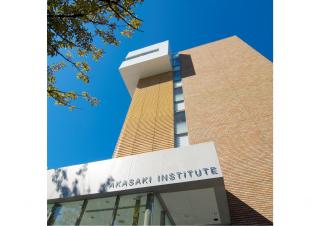
The Akasaki Institute was built to commemorate the research achievements of Distinguished Professor Isamu Akasaki, promote original and cutting-edge scientific and technological research at Nagoya University, and contribute to society at large. The exhibition room on the first floor is free to enter and open to the public. On display are a 160-inch LED display, traffic lights and mobile phones using blue light-emitting diodes, Professor Akasaki's research achievements, and experimental equipment. In addition, you can see an official replica of the Nobel Prize medal awarded to Professor Akasaki and Professor Hiroshi Amano in 2014, as well as the same equipment that Professor Akasaki donated to the Nobel Museum. See More
The Akasaki Institute was built to commemorate the research achievements of Distinguished Professor Isamu Akasaki, promote origin…See More
-
Eastern Area
Nagoya University 2008 Nobel Prize Exhibition Hall
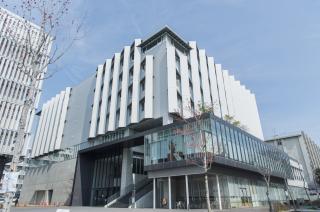
This exhibition hall was opened to commemorate the 2008 Nobel Prize in Physics awarded to Dr. Toshihide Masukawa and Dr. Makoto Kobayashi, both graduates of Nagoya University, and the 2008 Nobel Prize in Chemistry awarded to Dr. Osamu Shimomura, a former assistant professor at the same university. It displays official replicas of Nobel Prize medals and numerous explanatory panels on Nobel Prize research, allowing visitors to get up close and personal with the research that led to the Nobel Prize. It also introduces some of the research and educational styles of the Shoichi Sakata Laboratory (Elementary Particle Theory Laboratory, commonly known as "E-Lab"), which produced Dr. Masukawa and Dr. Kobayashi, and the Yoshimasa Hirata Laboratory, which trained Dr. Shimomura. See More
This exhibition hall was opened to commemorate the 2008 Nobel Prize in Physics awarded to Dr. Toshihide Masukawa and Dr. Makoto K…See More
-
Eastern Area
Nagoya University Chemistry Gallery (Noyori Materials Science Laboratory)
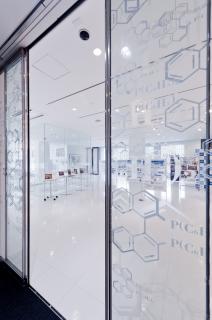
This gallery on the second floor of the Noyori Materials Science Laboratory was built to commemorate Nagoya University Distinguished Professor Ryoji Noyori, who received the Nobel Prize in Chemistry in 2001. It is open to the public with the aim of widely communicating the importance of chemistry to the general public and nurturing the next generation of researchers, and includes an exhibition room related to Distinguished Professor Noyori's Nobel Prize with the Inspiration Space for the Next-generation Researchers, Introduction to Dr. Noyori's Footsteps, and other sections. See More
This gallery on the second floor of the Noyori Materials Science Laboratory was built to commemorate Nagoya University Distinguis…See More
-
Eastern Area
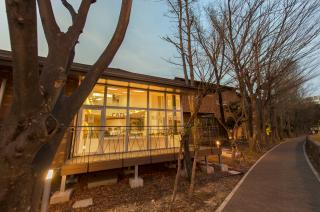
Nagoya University Gender Research Library
The Gender Research Library is open to anyone interested in gender issues. You can browse books related to women's, feminism, and gender studies, as well as various archives and collections. The library also plans and holds lectures, seminars, reading groups, etc. in the library's lecture rooms. See More
The Gender Research Library is open to anyone interested in gender issues. You can browse books related to women's, feminism, and…See More
-
Eastern Area
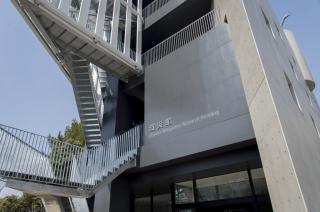
Nagoya University Disaster Mitigation Research Building
Nagoya University’s Disaster Mitigation Research Building is a base for the realization of a disaster-mitigating society through collaboration between industry, academia, government, and the private sector. It is the university's first seismically isolated building and is equipped with self-powered and solar power generation equipment. In normal times, it serves as a place for cutting-edge research into disaster prevention and mitigation as well as a learning space open to the public. Should a large-scale disaster occur, it acts as a base for disaster response by the university and local area. In addition, it is equipped with a ground monitoring system as well as an experimental facility that reproduces large-amplitude, long-period seismic shaking, and the entire building serves as a place for the development and testing of architectural earthquake-resistance technology. See More
Nagoya University’s Disaster Mitigation Research Building is a base for the realization of a disaster-mitigating society through …See More
-
Eastern Area
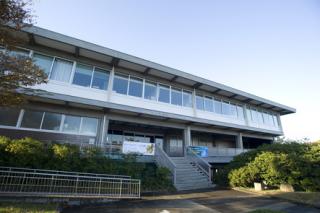
Nagoya University Museum
Nagoya University Museum was established in April 2000 as the fifth integrated university museum in Japan. Its purpose is to comprehensively and internationally provide feedback, resources, and social return on the academic specimens and materials of Nagoya University, as well as the results of university research. It has six main missions: Research, Education for the Next Generation, Exhibitions, Creation and Inheritance of Knowledge, Specimen Collection, International Exchange, etc. See More
Nagoya University Museum was established in April 2000 as the fifth integrated university museum in Japan. Its purpose is to comp…See More
-
Eastern Area
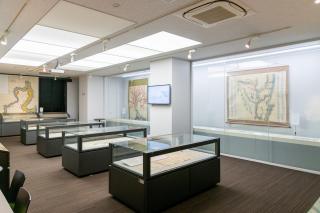
Ogaki Kyoritsu Bank Takagi Family Documents Exhibition Gallery (inside Nagoya University Central Library)
The Ogaki Kyoritsu Bank Takagi Family Documents Exhibition Gallery is located in a corner of Nagoya University's Central Library, and as a permanent exhibit, it displays replicas of the Takagi Family Documents owned by Nagoya University (the establishment also holds special exhibits on other materials in the collection). The Takagi Family Documents are a collection of documents formerly owned by the Nishi Takagi family, a hatamoto clan whose fief was Tokigo and Tarago in Ishizu County, Mino Province (present-day Kami-Ishizu Town, Ogaki City, Gifu Prefecture), and some of them have been designated as Important Cultural Properties by the nation under the name "Kotai Yoriai Nishi Takagi Family-related Materials". There is no admission fee, and anyone can view them. You can also freely tour the Central Library by signing your name at the reception desk. See More
The Ogaki Kyoritsu Bank Takagi Family Documents Exhibition Gallery is located in a corner of Nagoya University's Central Library,…See More
-
Eastern Area
Hoyu Hair Color Museum
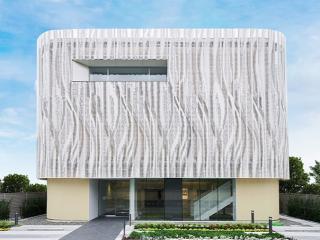
Japan's first museum specializing in hair color, the widely known hair coloring company Hoyu opened the Hoyu Hair Color Museum as part of its 100th anniversary commemoration project. The museum highlights the culture and history of hair dyeing in Japan and Hoyu's history and involvement in the field. See More
Japan's first museum specializing in hair color, the widely known hair coloring company Hoyu opened the Hoyu Hair Color Museum as…See More
-
Eastern Area
The Sugihara Chiune Square - Sempo Sugihara Memorial
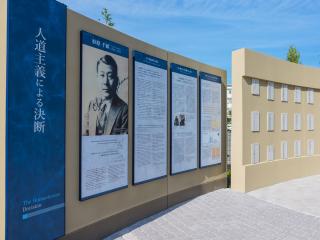
The Sugihara Chiune Square is an outdoor exhibition facility dedicated to honoring the humanitarian achievements of Chiune Sugihara, known for the "Visas for Life." The facility showcases life-size bronze statues of Sugihara and a Jewish family, as well as reproductions of visas on ceramic plates. Additionally, it displays historical materials from Sugihara's time at the former Aichi Prefectural Fifth Middle School (now Aichi Prefectural Mizuho High School). See More
The Sugihara Chiune Square is an outdoor exhibition facility dedicated to honoring the humanitarian achievements of Chiune Sugiha…See More
-
Eastern Area
Araki Shuseikan Museum
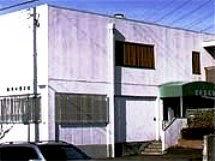
In 1952, Araki Minoru, a junior high school teacher at the time, began his journey into archaeology when one of his students discovered a single piece of pottery. Motivated by this find, he took it upon himself to establish a museum. The museum, called "Touzan Ancient Kiln Site Group," proudly exhibits excavated artifacts from archaeological sites in Chikusa, Showa, and Tempaku wards in Nagoya, in a permanent exhibition on the second-floor gallery. Additionally, on the first floor, they regularly host three annual exhibitions, each lasting four months, showcasing a various range of individual collections. See More
In 1952, Araki Minoru, a junior high school teacher at the time, began his journey into archaeology when one of his students disc…See More
-
Eastern Area
Yokoyama Art Museum
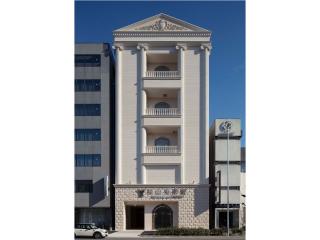
Opening October 1, 2017 in Higashi-ku, Nagoya. Find pottery and ceramics made for export during the Meiji and Taisho eras displayed, with a focus on items returning back home to where they were made. You can view a number of dramatic pieces with awe-inspiring detail such as pieces made in the Nagoya area for export, old Noritake pieces which are the first western-style pottery and ceramics of Japan, and rarely viewable Sumida-yaki gathered up by type. See More
Opening October 1, 2017 in Higashi-ku, Nagoya. Find pottery and ceramics made for export during the Meiji and Taisho eras displa…See More
-
Eastern Area
Nagoya Ceramics Hall
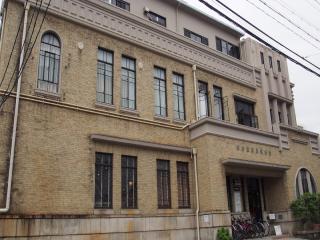
This retro Showa-style modern building was built in 1932 as the office for the Nagoya Ceramic Trading Union. The exterior features a large half-circle window and terracotta bricks, and all four sides are covered in ceramic scratch coat tiles. The interior has Art Deco-style ceiling decorations and Ina ware mosaic floor tiles. The areas open to the public on the first floor include exhibitions of ceramic ware made in Nagoya before and after the war, a painting workshop, and a shop selling ceramics. The second floor and above are rented out to tenants—primarily architectural and design. See More
This retro Showa-style modern building was built in 1932 as the office for the Nagoya Ceramic Trading Union. The exterior feature…See More
-
Eastern Area
Nagoya City Archives
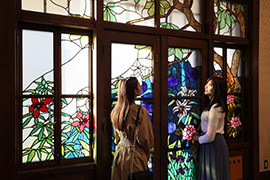
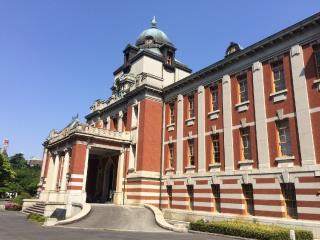
This site once housed the Nagoya Court of Appeals, District Court and Ward Court buildings. The Court of Appeals building, the oldest such building still in existence, was built in 1922 and is now a national cultural asset. There is much to see here, including one of Japan's best stained-glass windows, a reproduced courtroom under the old Constitution, a restored conference hall, prisoner lock-up and a commemorative exhibit from the Expo 2005 Aichi. See More
This site once housed the Nagoya Court of Appeals, District Court and Ward Court buildings. The Court of Appeals building, the ol…See More
-
Eastern Area
War and Peace Museum: Peace Aichi
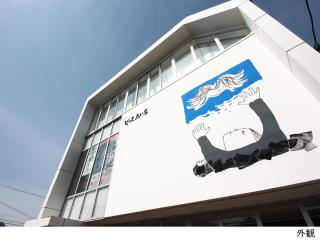
War and Peace Museum: Citizen-Operated This museum was established and is operated by citizens with the aim of learning, preserving, and taking action against wars for the sake of future peace. It was opened in 2007. With approximately 5400 wartime materials donated by citizens, the museum features permanent and special exhibitions, as well as events such as war survivors' narratives, recitals, and lectures. It serves as a museum-level facility dedicated to promoting peace and war education. See More
War and Peace Museum: Citizen-Operated This museum was established and is operated by citizens with the aim of learning, preserv…See More
-
Eastern Area
Bunkanomichi Hori Museum
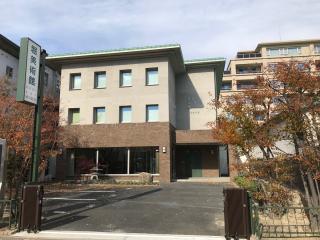
The Horikawa Museum is an art museum that opened in June of the 18th year of the Heisei era (2006) to showcase the collection of Makoto Hori, the founder of the Daito Tech Group. The museum mainly exhibits works by artists from the "Era of Passionate Art," who studied in Paris during the early Showa period and made efforts to create a Japanese-style Western painting. The museum displays masterpieces by representative artists of modern Japanese painting who were active in the Showa era, as well as contemporary art pieces. See More
The Horikawa Museum is an art museum that opened in June of the 18th year of the Heisei era (2006) to showcase the collection of …See More
-
Eastern Area
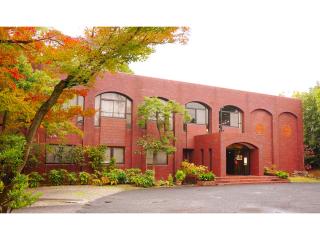
Showa Museum of Art (Goto Hoon Association Public Interest Incorporated Foundation)
A quiet tea ceremony implement museum with a lush, green garden Showa Museum of Art opened in 1978 as a private-collection museum. This natural-forest garden in a peaceful neighborhood in the east of Nagoya is home to the sukiya-style Nanzanjuso (an Aichi Prefecture designated cultural property), a former samurai villa that was relocated there in 1935. The tea ceremony room within is called Nejikago no Seki, and is opened up for guided visits about 10 times a year (reservations required). See More
A quiet tea ceremony implement museum with a lush, green garden Showa Museum of Art opened in 1978 as a private-collection m…See More
-
Eastern Area
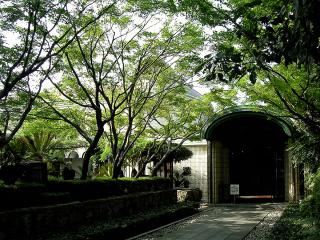
Kuwayama Art Museum (Kuwayama Seizan Association Public Interest Incorporated Foundation)
Kuwayama Art Museum was opened in 1981 with the donation of the first curator Seiichi Kuwayama's lifelong collection of artworks and craft pieces. The collection is based around contemporary Japanese paintings and tea ceremony implements from the Kamakura period to the modern day, so the exhibition is changed three times a year, focusing on Japanese paintings in the spring and tea ceremony implements in the fall. The small tea room called Seizan in the garden, the Borokaku hall on the second floor of the main building, the table tea ceremony room on the second floor of the annex building, and the multipurpose hall on the first floor of the annex building are all available for use by the public. See More
Kuwayama Art Museum was opened in 1981 with the donation of the first curator Seiichi Kuwayama's lifelong collection of artworks …See More
-
Eastern Area
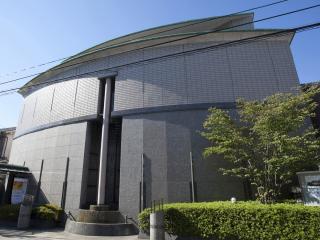
Furukawa Art Museum and Tamezaburo Memorial Hall
Sukiya-style architecture and art Furukawa Art Museum was opened in November 1991 to display art collected over many years by the first curator, Tamezaburo Furukawa (1890-1993). The art was donated with the wish that it would be enjoyed by many people, not just shut away in a private collection. The collection totals about 2,800 items, with a focus on contemporary Japanese painting. It also includes oil paintings, ceramics, crafts, a 15th century illustrated manuscript, and more. Currently, various educational activities, such as art lectures and workshops, are also available in addition to the exhibition of the collection. In November 1995, Tamezaburo's private residence was opened up to the public as the Tamezaburo Memorial Hall, in accordance with his wish for it to be a place of relaxation for everyone. Six buildings from the Tamezaburo Memorial Hall built in 1934, including … See More
Sukiya-style architecture and art Furukawa Art Museum was opened in November 1991 to display art collected over many years by …See More