

- Home
- Sightseeing Spots
Sightseeing Spots
1 - 20 / 38 RESULTS
-
Nagoya Station
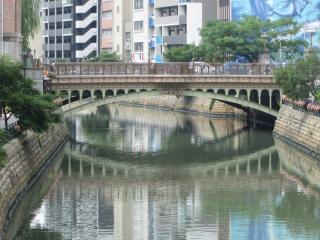
Naya Bridge
One of the seven bridges of the Horikawa River. In the 19th year of the Meiji era, when Nagoya Station was established on Sasashima, Hirokoji was extended westward as a street in front of the station, gaining attention. In the 2nd year of the Taisho era, a bridge with a bronze cast iron handrail was built. The current bridge was rebuilt in the 56th year of the Showa era and retains its arch-shaped appearance. See More
One of the seven bridges of the Horikawa River. In the 19th year of the Meiji era, when Nagoya Station was established on Sasashi…See More
-
Nagoya Station
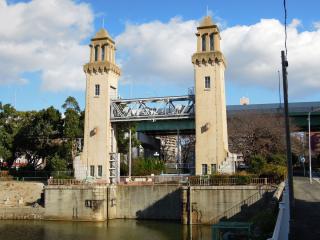
Nagakawa Canal and Matsushige Lock Gate
The Matsushige Lock Gate was built in 1930 and opened in 1932 to allow boats to pass between the Horikawa and Nakagawa canals, which had different water levels. It used a Stoney-type gate to control the water level inside the lock chamber, enabling boat navigation. Although it closed in 1976 due to declining boat use, it was preserved following public demand and designated as a cultural property in 1986 and an important structure in 1993 in Nagoya City. See More
The Matsushige Lock Gate was built in 1930 and opened in 1932 to allow boats to pass between the Horikawa and Nakagawa canals, wh…See More
-
Nagoya Station
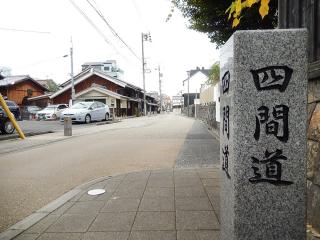
Historic Townscapes of Shikemichi
Shikemichi is a town of merchants located on the west bank of Horikawa River that goes through the castle town of Nagoya. This town was built in 1610, when the whole town of Kiyosu moved to the site with the construction of Nagoya Castle. "Shikemichi" means an about 7 meter-wide street, and the name is derived from the fact that the street's width was expanded for fire protection and for the commercial activities after an inferno occurred in 1700. Storehouses are built on the stone walls and traditional townhouses stand in a row. The landscape as we know it today was completed in the Genbun era (around 1740). It was designated as a townscape preservation area of Nagoya in 1986. See More
Shikemichi is a town of merchants located on the west bank of Horikawa River that goes through the castle town of Nagoya. This to…See More
-
Sakae / Fushimi
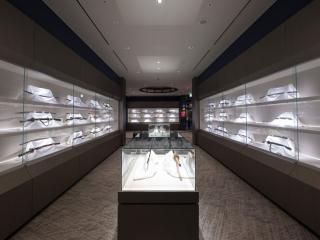
Nagoya Touken World Sword Museum
Hommachi-dori Street in the Sakae area was constructed as a means to commute between Nagoya Castle and Atsuta Jingu Shrine just as the castle was being built at the beginning of the Edo period. More than 400 years later and the metropolis of Nagoya as we now know it owes much of its culture to this road. Nagoya Touken World—or the Nagoya Sword World—came to be in this very area in the Nagoya Touken Museum as a homage to the rich local history. Nagoya Touken World displays numerous ancient swords, armor, and other wartime memorabilia as well as important cultural properties in the present day as proud pieces of Japanese culture. Transcend time and space in the world of Japanese weaponry at Nagoya Sword Museum along Hommachi-dori Street in Nagoya's bustling Sakae area—host to both a rich history and the future to come. See More
Hommachi-dori Street in the Sakae area was constructed as a means to commute between Nagoya Castle and Atsuta Jingu Shrine just a…See More
-
Northern Area
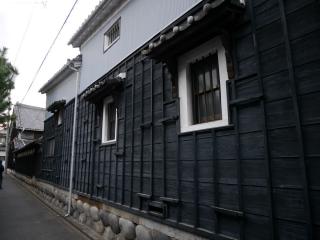
Historical Townscapes of Nakaotai
This town was built along the Iwakura Kaido highway, which bustled with life as vegetables were brought from Iwakura to the Fresh Produce Wholesale Market of Biwajima. Townhouses and storehouses remain to this day, and you can feel the history of the highway. See More
This town was built along the Iwakura Kaido highway, which bustled with life as vegetables were brought from Iwakura to the Fresh…See More
-
Northern Area
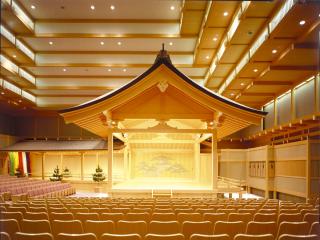
Nagoya Noh Theater
The world's largest noh theater. Enjoy a mystical world. The building has a refined Japanese-style exterior, as is fitting for occasions such as watching a noh performance. Its defining features are the stage made entirely of Japanese cypress wood, the wooden interior fittings, and the large viewing area with 630 seats. Besides being used for noh, kyogen, and other traditional performing arts, the space is also used for international conferences, lectures, weddings, and so on. There is also a conference room that holds 99 people (with a lecturers' waiting room) and can be used for conferences, training programs, and more. In the exhibition room, there are panel displays and videos that explain the history and charms of noh in a way even beginners can understand, as well as explanations about noh in Nagoya. Admission to the exhibition room is free. Four to five days a month, t… See More
The world's largest noh theater. Enjoy a mystical world. The building has a refined Japanese-style exterior, as is fitting for…See More
-
Eastern Area
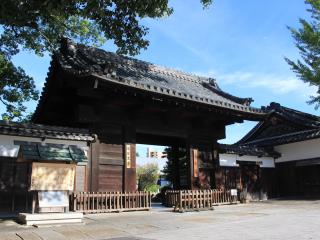
Tokugawaen Garden
Tokugawaen Garden is a Japanese garden with walkways winding around a central pond in the style of major daimyo gardens from the Edo period. A clear stream flows from a waterfall through a ravine and continues to a pond representing the ocean, a sight that symbolically condenses Japan's natural landscape. Furthermore, Tokugawaen is characterized by hilly terrain, transplanted woods, and large rocks appearing from all angles. The overall magnificence of the daimyo garden can be seen through the use of bold changes in composition and the incorporation of a wide variety of elements. People can enjoy the garden throughout the four seasons with beautiful greenery, autumn colors, and flowers such as peonies and irises. See More
Tokugawaen Garden is a Japanese garden with walkways winding around a central pond in the style of major daimyo gardens from the …See More
-
Eastern Area
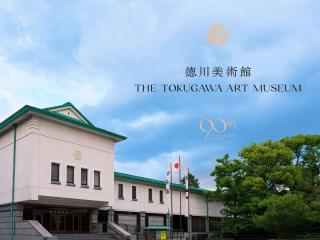
The Tokugawa Art Museum
An art museum of important artifacts from the Owari Tokugawa family, including items inherited from Tokugawa Ieyasu This art museum has a collection of more than 10,000 feudal lord implements, starting with items that once belonged to Tokugawa Ieyasu, and items treasured by the first head of the Owari Tokugawa family, Yoshinao (Ieyasu's ninth son), and his descendants. The museum is proud to hold nine National Treasures, including the Illustrated Scroll of The Tale of Genji, 59 important cultural properties, and many other high quality treasures that have been preserved in good condition. The main hall is registered as a national tangible cultural property. See More
An art museum of important artifacts from the Owari Tokugawa family, including items inherited from Tokugawa Ieyasu This art m…See More
-
Eastern Area
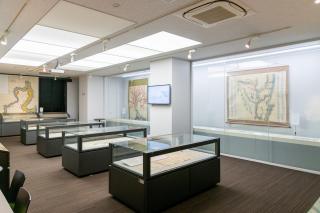
Ogaki Kyoritsu Bank Takagi Family Documents Exhibition Gallery (inside Nagoya University Central Library)
The Ogaki Kyoritsu Bank Takagi Family Documents Exhibition Gallery is located in a corner of Nagoya University's Central Library, and as a permanent exhibit, it displays replicas of the Takagi Family Documents owned by Nagoya University (the establishment also holds special exhibits on other materials in the collection). The Takagi Family Documents are a collection of documents formerly owned by the Nishi Takagi family, a hatamoto clan whose fief was Tokigo and Tarago in Ishizu County, Mino Province (present-day Kami-Ishizu Town, Ogaki City, Gifu Prefecture), and some of them have been designated as Important Cultural Properties by the nation under the name "Kotai Yoriai Nishi Takagi Family-related Materials". There is no admission fee, and anyone can view them. You can also freely tour the Central Library by signing your name at the reception desk. See More
The Ogaki Kyoritsu Bank Takagi Family Documents Exhibition Gallery is located in a corner of Nagoya University's Central Library,…See More
-
Eastern Area
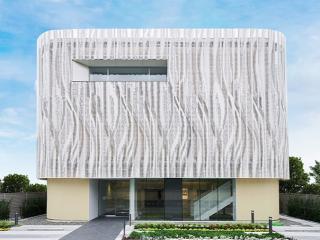
Hoyu Hair Color Museum
Japan's first museum specializing in hair color, the widely known hair coloring company Hoyu opened the Hoyu Hair Color Museum as part of its 100th anniversary commemoration project. The museum highlights the culture and history of hair dyeing in Japan and Hoyu's history and involvement in the field. See More
Japan's first museum specializing in hair color, the widely known hair coloring company Hoyu opened the Hoyu Hair Color Museum as…See More
-
Eastern Area
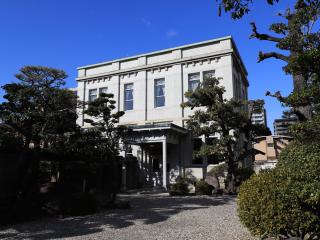
Former Residence of Sasuke Toyoda
Sasuke Toyoda was a business man and also the younger brother of Sakichi Toyoda, master of invention. At that time, the residence of Risaburo Toyoda was also located here. Although the gate and fence of Risaburo's place remain, only Sakichi's house exists to this day. On the 1st floor, you can see lights in the shape of lotus buds and air vents with the word "Toyota" designed into the motif of a crane. See More
Sasuke Toyoda was a business man and also the younger brother of Sakichi Toyoda, master of invention. At that time, the residence…See More
-
Eastern Area
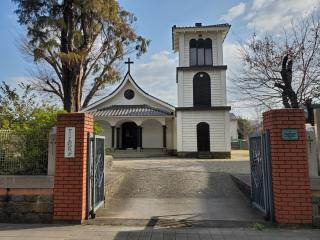
Catholic Chikaramachi Church
The church was established in 1888 by the French Catholic missionary Fr. Augustin Tulpin and Japanese doctor Shusai Inoue, thus making it the oldest church in Aichi. See More
The church was established in 1888 by the French Catholic missionary Fr. Augustin Tulpin and Japanese doctor Shusai Inoue, thus m…See More
-
Eastern Area
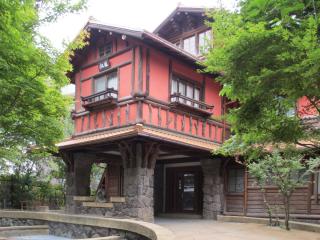
Yokiso
A villa of history and culture Yokiso is a villa constructed from the Taisho to the Showa Era on the hilly land of Kakuozan by the 15th-generation Ito Jirozaemon, the a founder of Matsuzakaya Department Store. This is a representative suburban villa in Nagoya. 1) The north garden has many highlights around a pond. No reservation necessary. 2) A tour to the buildings and the south garden is conducted by a guide. Prior application required. See More
A villa of history and culture Yokiso is a villa constructed from the Taisho to the Showa Era on the hilly land of Kakuozan by…See More
-
Eastern Area
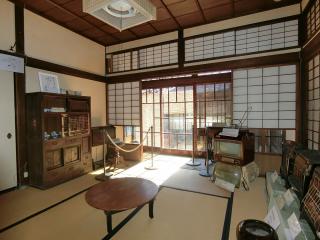
Former Residence of Tetsujiro Haruta
Tetsujiro Haruta, a successful ceramics merchant and founder of Taiyo Shoko Co., Ltd., is said to have asked architect Goichi Takeda to build this house. The Haruta residence consists of a Western-style building with a Japanese-style building behind it, and from 1947 to 1951, it was requisitioned by the U.S. 5th Air Force as a headquarters. The first floor of the Western-style building is currently being used as a French fusion restaurant. Tours of the buildings are conducted by request. For inquiries, please contact the Former Residence of Sasuke Toyoda, the east neighbor of the residence. (* Tours of the restaurant are not available) See More
Tetsujiro Haruta, a successful ceramics merchant and founder of Taiyo Shoko Co., Ltd., is said to have asked architect Goichi Tak…See More
-
Eastern Area
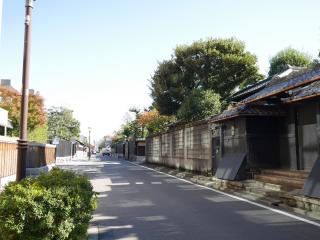
Townscapes of Shirakabe, Chikaramachi, and Shinokimachi
Area retains the layout of samurai residences from the Edo period, creating a picturesque townscape characterized by gates, walls, and lush trees. This beautiful townscape also includes well-preserved pre-war modern architecture, forming a harmonious blend of traditional mansion scenery and outstanding architecture from the pre-war era. See More
Area retains the layout of samurai residences from the Edo period, creating a picturesque townscape characterized by gates, walls…See More
-
Eastern Area
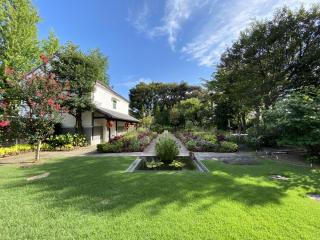
Cultural Path Hyakka Hyakuso
The building, consisting of a study, tea room, and storehouse constructed in the 9th year of Taisho era (1920), underwent renovation, and a multipurpose hall was newly built. The facility was opened in April of the 19th year of Heisei (2007). The garden, named after the "Hyakka Hyakusai Zu Byobu" (Important Cultural Property) held by the Tokugawa Museum, offers enjoyment throughout the four seasons. In the hall, visitors can relish tea and piano performances while gazing at the garden. See More
The building, consisting of a study, tea room, and storehouse constructed in the 9th year of Taisho era (1920), underwent renovat…See More
-
Eastern Area
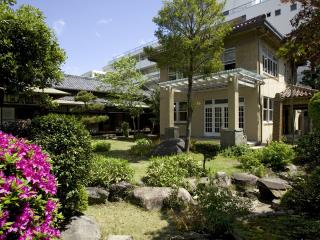
Cultural Path Shumoku Museum
A building that lives on through the changing times, with an unchanging charm The former residence of ceramics merchant Tamesaburo Imoto was built between the end of the Taisho period and the beginning of the Showa period. Japanese- and Western-style buildings are preserved on the grounds, along with two storehouses—one in the west and the other in the east—a tea room, and a garden. The residence is designated as a tangible cultural asset of the City of Nagoya and a building of scenic importance. See More
A building that lives on through the changing times, with an unchanging charm The former residence of ceramics merchant Ta…See More
-
Eastern Area
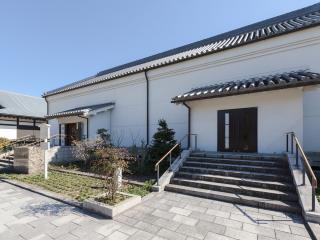
Nagoya City Hosa Library
Hosa Library is an open archive where excellent Japanese and Chinese classics originally owned by the Owari Tokugawa family are stored. In the reading room, the library's collection of books is available, a portion of which can be copied. Exhibitions to introduce early-modern samurai culture including the knowledge and culture of samurai families are held. In addition, temporary lectures are held in cooperation with Tokugawa Art Museum or Tokugawaen. The new building was opened in November 2004. See More
Hosa Library is an open archive where excellent Japanese and Chinese classics originally owned by the Owari Tokugawa family are s…See More
-
Southern Area
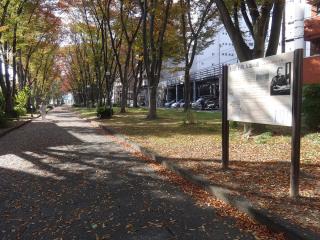
Sugihara Chiune: The Path of Humanity
Chiune Sugihara (1900-1986) was a Japanese diplomat who played a significant humanitarian role during World War II. He issued over 2,000 transit visas to Jewish refugees, saving numerous lives. Sugihara spent about ten years of his childhood in Nagoya. To commemorate his accomplishments, a pathway of approximately 4.5 kilometers was named "Sugihara Chiune: The Path of Humanity," connecting the area near his former residence to his alma mater, the former Aichi Prefectural Fifth Middle School (now Aichi Prefectural Mizuho High School). See More
Chiune Sugihara (1900-1986) was a Japanese diplomat who played a significant humanitarian role during World War II. He issued ove…See More
-
Southern Area
Okehazama Kosenjo Park
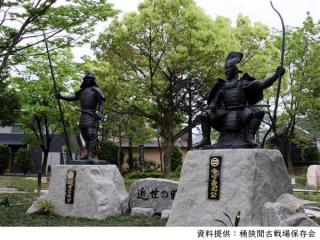
The Okehazama Battlefield Park is the central location of the Battle of Okehazama that occurred in the year 1560 during the Eiroku era. It is the place where Imagawa Yoshimoto, who had set up his camp on Mt. Okehazama, was slain by Hattori Koheita and Mouri Shinsuke. Locally, it is known as "Takaraku Tsubo." As a historical site park, it has been developed and within the park, you can find bronze statues of Oda Nobunaga and Imagawa Yoshimoto, as well as the tombstone of Imagawa Yoshimoto, commemorating the significant events that took place there. See More
The Okehazama Battlefield Park is the central location of the Battle of Okehazama that occurred in the year 1560 during the Eirok…See More