



- Home
- Sightseeing Spots
Sightseeing Spots
1 - 10 / 10 RESULTS
-
Northern Area
Nagoya Castle
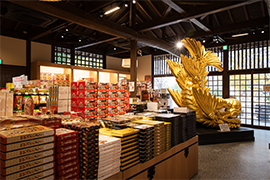
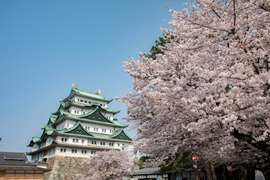
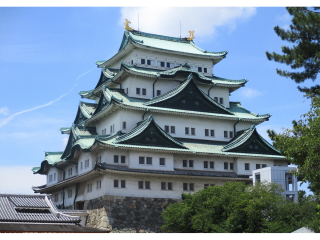
In 1610, Tokugawa Ieyasu began the construction of Nagoya Castle, as a residence for his son Yoshinao. The castle burned down in the war, but in 1959, the five-story main tower keep (approx. 48 meters), with its golden shachi ornaments, and the sub tower keep (approx. 24 meters) were reconstructed. The Nagoya Omotenashi Bushotai greet visitors every day at the main gate, and were the reason behind the bushotai boom across the nation. They also put on an omotenashi performance on weekends and national holidays. In addition, Hommaru Palace was fully opened to the public on June 8, 2018, after the completion of reconstruction work that had taken over 10 years. See More
In 1610, Tokugawa Ieyasu began the construction of Nagoya Castle, as a residence for his son Yoshinao. The castle burned down in …See More
-
Northern Area
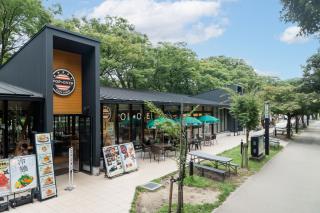
Muneharu Zone of Kinshachi Yokocho
This is one of the commercial establishments to open in two areas of the Nagoya Castle premises on March 29, 2018. The Muneharu Zone, situated in the east gate area of Nagoya Castle owes its name to the seventh provincial ruler, Lord Muneharu Tokugawa, and is created with the concepts of modernity and change. The buildings are constructed with large panes of glass in a bright, and modern Japanese style of architecture. The zone is lined with restaurants where you can eat highly creative cuisine from owners active not only in Nagoya, but all of Japan and abroad. Enjoy yourself in Kinshachi Yokocho during your visit to Nagoya Castle. See More
This is one of the commercial establishments to open in two areas of the Nagoya Castle premises on March 29, 2018. The Munehar…See More
-
Eastern Area
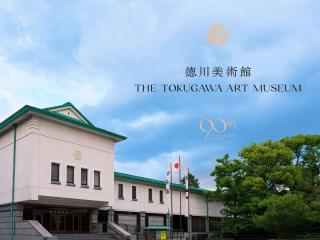
The Tokugawa Art Museum
An art museum of important artifacts from the Owari Tokugawa family, including items inherited from Tokugawa Ieyasu This art museum has a collection of more than 10,000 feudal lord implements, starting with items that once belonged to Tokugawa Ieyasu, and items treasured by the first head of the Owari Tokugawa family, Yoshinao (Ieyasu's ninth son), and his descendants. The museum is proud to hold nine National Treasures, including the Illustrated Scroll of The Tale of Genji, 59 important cultural properties, and many other high quality treasures that have been preserved in good condition. The main hall is registered as a national tangible cultural property. See More
An art museum of important artifacts from the Owari Tokugawa family, including items inherited from Tokugawa Ieyasu This art m…See More
-
Eastern Area
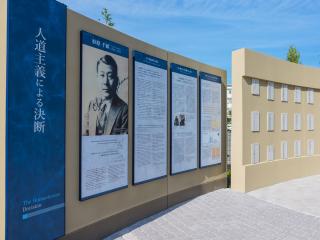
The Sugihara Chiune Square - Sempo Sugihara Memorial
The Sugihara Chiune Square is an outdoor exhibition facility dedicated to honoring the humanitarian achievements of Chiune Sugihara, known for the "Visas for Life." The facility showcases life-size bronze statues of Sugihara and a Jewish family, as well as reproductions of visas on ceramic plates. Additionally, it displays historical materials from Sugihara's time at the former Aichi Prefectural Fifth Middle School (now Aichi Prefectural Mizuho High School). See More
The Sugihara Chiune Square is an outdoor exhibition facility dedicated to honoring the humanitarian achievements of Chiune Sugiha…See More
-
Eastern Area
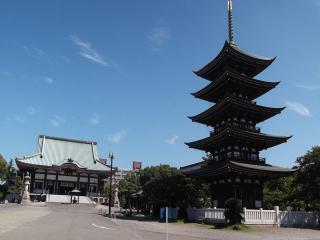
Nittaiji (Kakuozan)
Nittaiji Temple was established in 1904 to enshrine Buddha's ashes and glit bronze received from the king of Thailand in 1900. This is the only non-sectarian Buddhist temple that every sect of Buddhism manages in order. In the temple site, there are a Gandhara style tower, a Hoanto, where the skeletal remains are maintained, a garden called Hassoen, and a tea ceremony room, Soketsuan. The five-story pagoda was built in April 1997. A street fair is held on the 21st day of the month. See More
Nittaiji Temple was established in 1904 to enshrine Buddha's ashes and glit bronze received from the king of Thailand in 1900. Th…See More
-
Eastern Area
Yagotosan Koshoji Temple
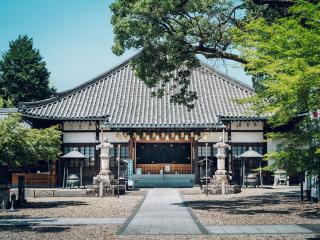
The impressive presence of the historic Owari Koya Yagotosan Koshoji Temple is a Shingon Sect temple in Nagoya City. It was built in 1688 by Buddhist priest Tenzui Ensho, who received Kukai's five-pronged vajra. It became known as a place of worship for the Owari Tokugawa family after the second lord of the clan, Tokugawa Mitsutomo, began devoting himself to the priest's teachings. Also called Owari Koya, it became a place of learning and training, as well as an object of worship for many people. See More
The impressive presence of the historic Owari Koya Yagotosan Koshoji Temple is a Shingon Sect temple in Nagoya City. It was bu…See More
-
Southern Area
Atsuta Jingu Shrine
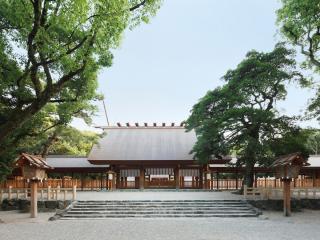
Atsuta Jingu Shrine is located in the southern part of Nagoya within Atsuta Forest, a spacious, verdant shrine grove. Familiarly known as “Atsuta-san," close to 7 million people visit this shrine annually. Not only those from Nagoya but people throughout Japan consider Atsuta Jingu Shrine their spiritual hometown—a place of deep reverence and faith. The second largest shrine after Ise Shrine in Mie Prefecture, members of the Imperial Court and samurai warriors have prayed here since ancient times. Atsuta Jingu Shrine is also famous for a festival commemorating the transfer of the Kusanagi no Tsurugi sword, one of the Three Sacred Imperial Treasures, to Atsuta Jingu Shrine. Formerly built in the style of Owari-zukuri, Atsuta Jingu Shrine was remodeled in 1893 in the Shimei-zukuri style, the same as Ise Shrine. See More
Atsuta Jingu Shrine is located in the southern part of Nagoya within Atsuta Forest, a spacious, verdant shrine grove. Familiarly …See More
-
Southern Area
Tobe Shrine
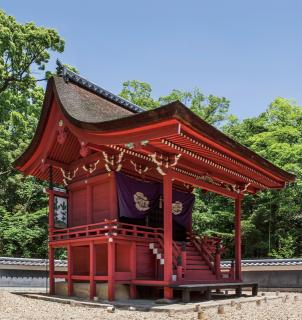
Located in Nagoya city, is the only National Important Cultural Property among the shrines in the city. Its history dates back to the 8th year of the Keicho era (1603) when it was transferred from Tsushima Shrine in Tsushima City, Aichi Prefecture. In the 11th year of the Keicho era (1606), Matsudaira Tadayoshi (the fourth son of Tokugawa Ieyasu) prayed for recovery from illness and miraculously regained his health. To express his gratitude for this divine favor, the main hall, along with the worship hall, festival hall, and corridor, were donated to the shrine. During the Edo period, the Owari Domain annually donated 100 koku of rice to the shrine as part of their support. The shrine's maintenance and repairs were also carried out by the domain's lord. The main hall, a representative example of Momoyama architecture, has been designated as a National Important Cultural Property, whi… See More
Located in Nagoya city, is the only National Important Cultural Property among the shrines in the city. Its history dates back to…See More
-
Southern Area
Sugihara Chiune: The Path of Humanity
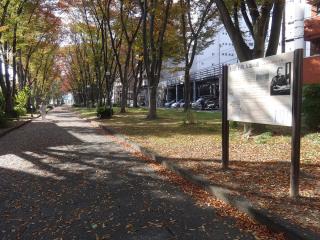
Chiune Sugihara (1900-1986) was a Japanese diplomat who played a significant humanitarian role during World War II. He issued over 2,000 transit visas to Jewish refugees, saving numerous lives. Sugihara spent about ten years of his childhood in Nagoya. To commemorate his accomplishments, a pathway of approximately 4.5 kilometers was named "Sugihara Chiune: The Path of Humanity," connecting the area near his former residence to his alma mater, the former Aichi Prefectural Fifth Middle School (now Aichi Prefectural Mizuho High School). See More
Chiune Sugihara (1900-1986) was a Japanese diplomat who played a significant humanitarian role during World War II. He issued ove…See More
-
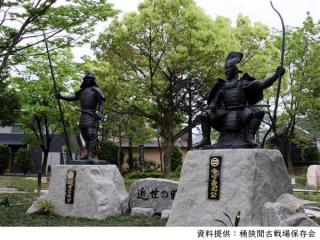
Southern Area
Okehazama Kosenjo Park
The Okehazama Battlefield Park is the central location of the Battle of Okehazama that occurred in the year 1560 during the Eiroku era. It is the place where Imagawa Yoshimoto, who had set up his camp on Mt. Okehazama, was slain by Hattori Koheita and Mouri Shinsuke. Locally, it is known as "Takaraku Tsubo." As a historical site park, it has been developed and within the park, you can find bronze statues of Oda Nobunaga and Imagawa Yoshimoto, as well as the tombstone of Imagawa Yoshimoto, commemorating the significant events that took place there. See More
The Okehazama Battlefield Park is the central location of the Battle of Okehazama that occurred in the year 1560 during the Eirok…See More