





- Home
- Sightseeing Spots
Sightseeing Spots
1 - 4 / 4 RESULTS
-
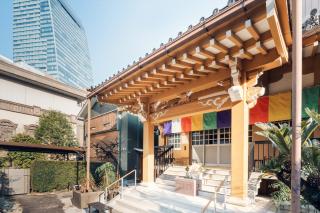
Nagoya Station
Kuon-ji Temple (Nichiren Shu School)
Kuon-ji Temple is a Nichiren Shu temple built around 150 years after its founding at the end of the Edo period. Close to Nagoya Station, it stands quietly in a corner lined with office buildings. Please spend a moment of peace of mind while looking at the garden that colors each season. See More
Kuon-ji Temple is a Nichiren Shu temple built around 150 years after its founding at the end of the Edo period. Close to Nagoya S…See More
-
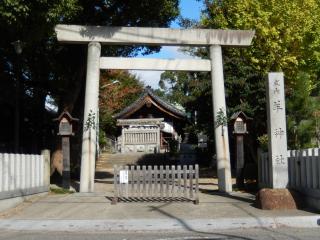
Northern Area
Hitsuji Shrine
The name of the shrine, Hitsuji Jinja is derived from a historical connection to a person called Hitsuji Taif), who was the lord of the Hitsuji clan. According to the inscriptions on the "Tago-hi" monument in Yoshii Town, Tano District, Gunma Prefecture (now part of Takasaki City, Yoshii Town), Hitsuji Taifu used to stop at a residence in this area (currently located in Nagoya City, Kita Ward, Tsuji-cho) during his journey to the capital in Nara. The people of this land wished for peaceful living, and thus, Hitsuji Taifu enshrined the deity of fire, leading to the shrine being called Hitsuji Jinja - the shrine where Hitsuji Taifu prayed for tranquility in people's hearts. The location of Tsuji-cho, where the shrine is situated, is described in the historical document of Owari Province as "Now, the village is called Tsuji, but it used to be known as 'Hinotsuji,' referring to its ass… See More
The name of the shrine, Hitsuji Jinja is derived from a historical connection to a person called Hitsuji Taif), who was the lor…See More
-
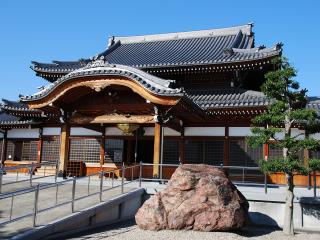
Western Area
Arako Kannon Temple
Arako Kannon Temple (Jokaizan Enryuin Kannonji Temple) is one of the four major Kannon temples in Owari, and is a Tendai Sect temple named Kannonji. It is also famous for housing 1,250 Buddhist statues made by Enku. Arako Kannon Temple is said to have been built in 729, and was repaired by the lord of Kaga, Maeda Toshiie, in 1576. The tahoto (two-storied pagoda) was reconstructed in 1536, and is the oldest wooden structure in Nagoya. It has been designated as one of the nation's important cultural properties. See More
Arako Kannon Temple (Jokaizan Enryuin Kannonji Temple) is one of the four major Kannon temples in Owari, and is a Tendai Sect tem…See More
-
Outside of Nagoya
Hoosan Jinmokuji (Jinmokuji Kannon)
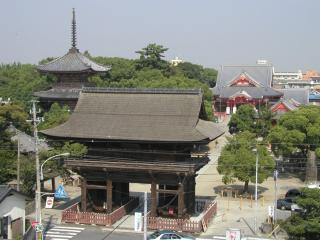
In the year 597, a fisherman named Ryumaro from Jinmoku Village in Ise was casting his fishing net in the bay of Egami Sho when he pulled up a golden statue of the Holy Kannon (Kannon Bodhisattva). He built a temple to enshrine the Kannon statue on the northern part of the bay, and this is the legend surrounding the founding of Jinmokuji (Hadame-dera) that has been passed down through generations. It is one of Japan's most renowned ancient temples, following in the footsteps of Horyuji and Shitennoji. The Holy Kannon statue is said to have been created after receiving a prediction from Shakyamuni Buddha. It traveled through Baekje (an ancient kingdom in Korea) and arrived in Japan. It is believed to be one of the three statues that were cast into the sea in 585. The other two statues were also found. The Amida Buddha is now enshrined at Zenkouji Temple in Shinshu, while the Seishi Bud… See More
In the year 597, a fisherman named Ryumaro from Jinmoku Village in Ise was casting his fishing net in the bay of Egami Sho when h…See More