




- Home
- Sightseeing Spots
Sightseeing Spots
21 - 36 / 36 RESULTS
-
Port
Birding Hots Spot Fujimae Tideland
Nagoya City Wild Bird Watching Building: Where you can see migrating birds on the Fujimae Tidal Flat Throughout the year, more than 100 species of wild birds land at the Fujimae Tidal Flat. It is the foremost landing spot for migratory birds in the country, and is a designated Ramsar Site. The Nagoya City Wild Bird Watching Building is a place where you can watch them. You can see sandpipers and plovers in the migrating seasons in the spring and fall, and thousands of ducks and dunlins in winter. Recently, there has been an increase in sightings of ospreys (a relative of the hawk). If you're lucky, you'll get to see an osprey catch and eat a fish. See More
Nagoya City Wild Bird Watching Building: Where you can see migrating birds on the Fujimae Tidal Flat Throughout the year, more…See More
-
Port
Arakogawa Park
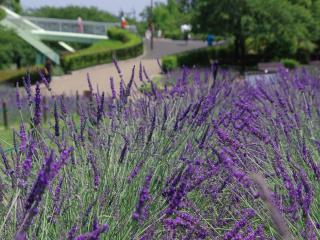
This is a park where you can enjoy beautiful scenery throughout the year. It is located near the mouth of the Arako River and stretches along both sides of the river. The park is filled with various green demonstration gardens and open spaces, making it a lush and green place to visit. One of the highlights is the "Lavender Garden" in Arako River Park. Here, you can see purple flowers swaying in the wind and experience a subtle and pleasant fragrance. They hold a special event called the "Lavender Fair" during the blooming season. Throughout the year, the park offers other attractions too. In spring, cherry blossoms bloom in all their glory, and in autumn, various trees display their vibrant fall colors. It's a wonderful place to enjoy the changing scenery with the passing of each season. See More
This is a park where you can enjoy beautiful scenery throughout the year. It is located near the mouth of the Arako River and str…See More
-
Port
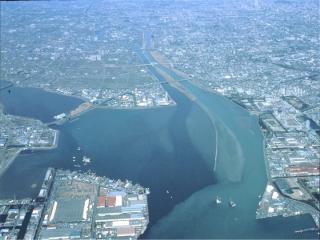
Fujimae Higata
Preserving Precious Nature in a Big City The Fujimae Tidal Flat, located in the innermost part of Nagoya Port at the mouth of the Shonai, Shinkawa, and Nikko Rivers, stands as one of Japan's leading destinations for approximately 40 species of sandpipers and plovers. At one point, it faced the threat of being turned into a landfill site, however, this plan was ultimately canceled. In 2002, the site was registered as a wetland under the Ramsar Convention, earning recognition as an internationally important tidal flat. See More
Preserving Precious Nature in a Big City The Fujimae Tidal Flat, located in the innermost part of Nagoya Port at the mouth of th…See More
-
Port
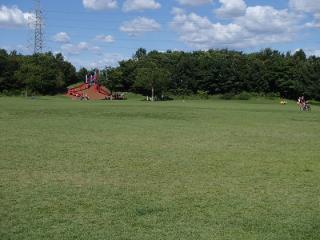
Agricultural Park / Toda River Greenery Park
Let's go! A One-Day Trip of Farming and Greenery The Toda River Greenery Park, spanning approximately 2.5 kilometers along both sides of the Toda River, is a vast park developed with the themes of an agricultural park which opened in the first year of Heisei (1989) to nurture the importance of agriculture and love for flowers among citizens, and health and sports village. Situated in the southwestern part of Nagoya, it is the largest park in that area. See More
Let's go! A One-Day Trip of Farming and Greenery The Toda River Greenery Park, spanning approximately 2.5 kilometers along both …See More
-
Port
Megrass Garden Nagoya
Megrass Garden Nagoya is a garden facility located along the coast in Minato Ward, Nagoya City, Aichi Prefecture. The grounds consist of six beautiful zones with a pleasant, layered design, where a “relay of flowers” unfolds throughout the year. In the special space “Secret Garden,” open only in spring, visitors can enjoy an immersive experience surrounded by flowers and appreciate the garden as if viewing art... Along with proposing this new kind of value, we hope to bring many moving experiences to all who visit through the power of plants. A “garden,” where plants live, is a place of constant change—eternally unfinished. From the fresh first year after its renewal opening to the second and third years beyond, we aim to create a next-generation garden that “continues to evolve,” so that its character deepens ever more richly each time the seasons turn. See More
Megrass Garden Nagoya is a garden facility located along the coast in Minato Ward, Nagoya City, Aichi Prefecture. The grounds …See More
-
Western Area
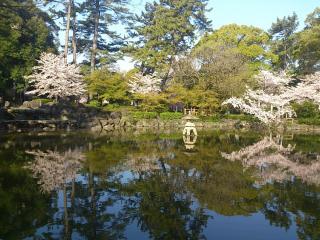
Nakamura Park
A Japanese-style park where you can enjoy the waterside Nakamura Park was established based on the Hokoku Shrine, which was established in 1885 to celebrate the birth of Taiko (retired imperial advisor) Toyotomi Hideyoshi. The park contains a Japanese style garden with a path around a central pond, mounds and trees. The park also has the Toin Tea Room, which is a fragrance garden and is known as a scenic spot for wisteria. In addition, there are Nakamura Park Culture Plaza, containing the Nagoya Hideyoshi & Kiyomasa Memorial Museum, which introduces Hideyoshi and Kato Kiyomasa, a warlord born in the Owari district, and the era in which they were actively involved; Nakamura Shogekijo (little theater); and Nakamura Library. The Taiko Festival is held at Hokoku Shrine on May 18 annually. See More
A Japanese-style park where you can enjoy the waterside Nakamura Park was established based on the Hokoku Shrine, which was es…See More
-
Outside of Nagoya
Nagakute Battlefield Memorial Museum
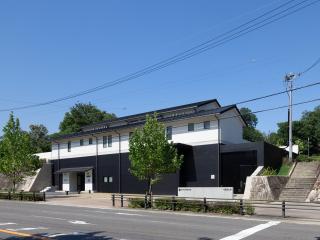
In Tensho 12 (1584), a “decisive battle that would determine the fate of the nation” took place in Nagakute. It was the Battle of Nagakute, fought between the forces of Hashiba Hideyoshi (later Toyotomi Hideyoshi), who would later become the ruler of the realm, and Tokugawa Ieyasu. The Nagakute Battlefield Memorial Museum stands adjacent to the Nagakute Ancient Battlefield, a nationally designated historic site that was the main battleground. Through digital content and historical materials that convey the sense of distance between the battle-related sites and the immediacy of the battlefield, visitors can experience the stage of history firsthand. One of the highlights of our museum is a restored reproduction of the Folding Screen Depicting the Battle of Nagakute (one six-panel screen) (original in the collection of the Tokugawa Art Museum, Tokugawa Reimeikai Foundation). This re… See More
In Tensho 12 (1584), a “decisive battle that would determine the fate of the nation” took place in Nagakute. It was the Battle of…See More
-
Outside of Nagoya
Aichi Asahi Site Museum
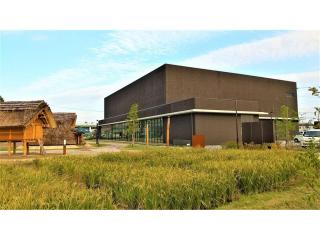
This museum of ancient civilization introduces the Asahi Ruins, the largest Yayoi-period ruins in Japan, located in Aichi Prefecture. The Asahi Ruins are one of the largest settlements in Japan, which existed from the early Yayoi period to the early Kofun period (6th century BC to 4th century AD). The settlement flourished as the center of life and culture in the region and played an important role in connecting the Yayoi cultures of eastern and western Japan. Investigations to date have revealed that the ruins stretch 1.4 km from east to west and 0.8 km from north to south, with an estimated area of 800 thousand to one million square meters. Residences were built on slight elevations on the north and south sides of a valley that flows from northeast to southwest. Graves were built to surround the residential area with large burial areas particularly widespread on the east and west … See More
This museum of ancient civilization introduces the Asahi Ruins, the largest Yayoi-period ruins in Japan, located in Aichi Prefect…See More
-
Outside of Nagoya
Ghibli Park
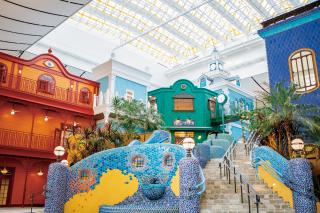
Ghibli Park was established inside Expo 2005 Aichi Commemorative Park (Moricoro Park) to illustrate the beloved works of Studio Ghibli. The park is made up of five different areas, with the first phase opening Ghibli's Grand Warehouse, the Hill of Youth, and Dondoko Forest to the public in November 2022. The second phase opened Mononoke Village in fall of 2023 and the Valley of Witches is planned for March 2024. Take walk through forests and paths leading you right into the world of Studio Ghibli. See More
Ghibli Park was established inside Expo 2005 Aichi Commemorative Park (Moricoro Park) to illustrate the beloved works of Studio G…See More
-
Outside of Nagoya
Aotsuka kofun and historic site park
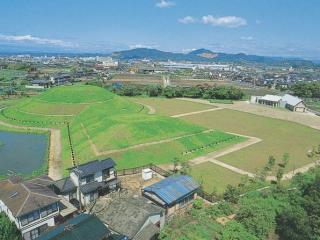
Aotsuka kofun is a keyhole-shaped Japanese burial mound located in the southern part of Inuyama City, on the ridge of the diluvial upland 31 meters above sea level. The total length of the burial mound is 123m. The height of the circular portion is 12m and that of square-shaped portion is 7m. This burial mound is the second largest tomb in Aichi Prefecture. There are exhibtion room and a lounge at the guidance facility. See More
Aotsuka kofun is a keyhole-shaped Japanese burial mound located in the southern part of Inuyama City, on the ridge of the diluvia…See More
-
Outside of Nagoya
Aichi Farm
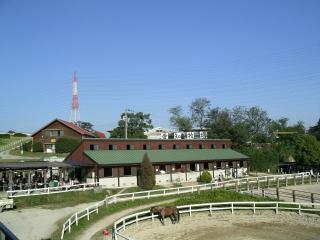
This is a sightseeing farm located in Nisshin-City, on the outskirts of Nagoya. The animals-including cows, horses, sheep, goats, pigs, rabbits and ducks-are kept on the farm and visitors can touch most of them. Fresh milk and gelatos peculiar to the farm are provided. The visitors can mount up on horseback and enjoy riding, circling in a 130-meter course. Children age 2 or over can ride a pony. The maze in the flower field also attracts visitors. See More
This is a sightseeing farm located in Nisshin-City, on the outskirts of Nagoya. The animals-including cows, horses, sheep, goats,…See More
-
Outside of Nagoya
Nabana no Sato
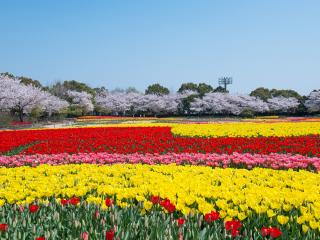
In the site of 230,000 square meters are the following facilities: "Begonia Garden, a Flower Garden of the Andes" where about 12,000 flowers of many kinds vividly bloom throughout the year, a spa named "Nagashima Onsen Satonoyu", "Nagashima Beer Restaurant" where visitors can enjoy three types of local beer, and eight restaurants of Japanese, Chinese and Western styles. See More
In the site of 230,000 square meters are the following facilities: "Begonia Garden, a Flower Garden of the Andes" where about 12,…See More
-
Outside of Nagoya
Nagakute Ancient Battlefield Memorial Park
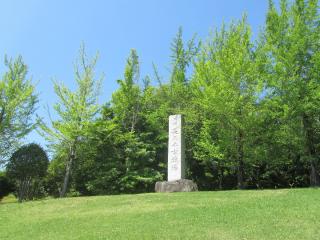
This is the ancient battlefield where Toyotomi Hideyoshi and Tokugawa Ieyasu fought a fierce battle in 1584 and it is designated as national historic site. Today, the site is maintained as Kosenjo Park with mounds of the warlords and materials on the local area. In addition, a stone on which Tokugawa Ieyasu sat and held a war council remains in the Historical Museum located 1 km north of Kosenjo Park. See More
This is the ancient battlefield where Toyotomi Hideyoshi and Tokugawa Ieyasu fought a fierce battle in 1584 and it is designated …See More
-
Outside of Nagoya
Japan Monkey Park
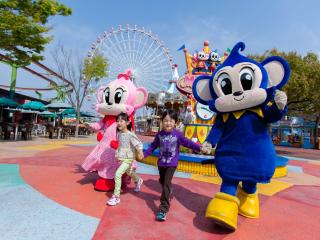
Japan Monkey Park is an amusement park offering fun for the family with over 30 kinds of different attractions in the mountains from ones that will make you scream your lungs to those even small children will enjoy. Large-scale events which change by season, greetings and mini stage shows by original mascots Monpa-kun and Monpi-chan, as well as the "Water Paradise Monpuru" outdoor leisure pool in summer are incredibly popular. Enjoy yourself year-round at this park. See More
Japan Monkey Park is an amusement park offering fun for the family with over 30 kinds of different attractions in the mountains f…See More
-
Outside of Nagoya
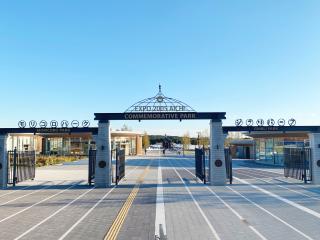
Aichi Expo Memorial Park (Morikoro Park)
Moricoro Park is a nature-rich, large urban park. It was established as a commemorative park after hosting the "Aichi Expo" in 2005. With attractions like the tallest Ferris wheel in the Tokai region, vast lawns, an ice skating rink, and cycling courses, the park offers a variety of facilities for a full day of enjoyment. Unique events such as gourmet festivals, sports events, and markets are held mainly on weekends, adding to the park's appeal. See More
Moricoro Park is a nature-rich, large urban park. It was established as a commemorative park after hosting the "Aichi Expo" in 20…See More
-
Outside of Nagoya
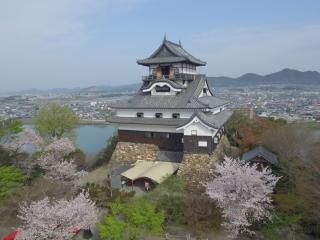
Inuyama Castle
The castle tower looks three stories tall, but has four stories inside, plus two basement floors. It was built by Oda Yojiro Nobuyasu in 1537, and is believed to be the oldest type of Japanese castle. It is designated as a National Treasure. The Naruse family lived in the castle since it was bestowed upon them by the second shogun Hidetada in the Edo period until the end of the period, and until 2004, it was one of only a few privately owned castles in Japan. Possession of the castle has now been transferred to the Inuyama Castle Hakutei Bunko, and it is managed by Inuyama City and visited by many people who come to the castle See More
The castle tower looks three stories tall, but has four stories inside, plus two basement floors. It was built by Oda Yojiro Nobu…See More